


 Educast Nepal
EDUCAST, In a major effort to address youth outflow and foster sustainable economic development, the Korea International Cooperation Agency (KOICA) hosted its flagship event, “K-Connect: Promoting the Entrepreneurship Ecosystem in Nepal,” on August 6 in Kathmandu. The gathering brought together grassroots entrepreneurs, investors, commercial banking executives, development partners, and key government policymakers to establish an integrated network that connects local business ambition directly with funding, technical knowledge, and strategic mentorship.
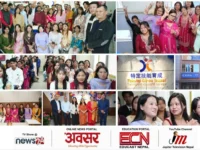
The event saw active participation from high-ranking diplomatic and government officials. Chief Guest Park Tae-Young, Ambassador of the Republic of Korea to Nepal, highlighted South Korea’s own growth story, emphasizing that investments in human capital, strong public institutions, and private sector innovation were central to Korea’s national development. Special Guests Hem Raj Tamang, Joint Secretary from the Ministry of Youth, Labour and Employment (MoYLE), and Navaraj Dhakal, Joint Secretary from the Office of the Prime Minister and Council of Ministers (OPMCM), acknowledged KOICA’s sustained support and stressed that job creation, enterprise development, and skill enhancement are critical for Nepal’s economic future. Welcoming the participants, KOICA Country Director Mooheon Kong reaffirmed the agency’s commitment to nurturing local talent across regions, while Deputy Country Director Sujin Yeo underlined that K-Connect focuses fundamentally on human connection—linking aspiring business founders to necessary capital, advisory services, and markets.
Central to the initiative are three primary KOICA-funded development programs operating throughout the country. The Korea Returnee Migrants Reintegration (K-HaMi) project has provided financial literacy and technical training to over 15,000 returnee workers, with KOICA allocating $2.5 million in interest subsidies to make enterprise loans accessible for roughly 300 returnees. In the Terai flood plains, the Climate Smart Agriculture (CSA) initiative has created 343 green jobs and established 109 agribusinesses supported by the $1.5 million Terai Agribusiness and Enterprise Challenge Fund (TAECF). Additionally, the Green Job Creation through Recycling and Upcycling (GCRU) project in Pokhara has established 115 waste-management enterprises, trained 1,300 founders, and engaged nearly 11,000 households in sustainable recycling.
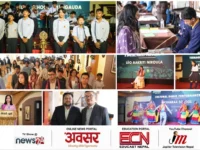
Grassroots impacts were highlighted through success presentations by local entrepreneurs, including Rabilal Panth of Gaurabh Dugdha Dairy Udhyog, Kasim Rain of R.C. Bahu Udheshiya Jaibik Krishi Farm, and Shanti Adhikari of Pokhreli Sisa Kalam. Following these journeys, presentation and advisory sessions led by Neeku Acharya from Agricultural Development Bank Limited (ADBL) and Siddhant Raj Pandey, CEO of Business Oxygen (BO2), detailed the investment parameters, credit frameworks, and equity opportunities available to early-stage businesses.
A key highlight of the afternoon was the live pitching session where six emerging founders presented their commercial scaling plans: Bimala Lama (Himalayan Hospitality and Training Center), Narayan Pandey (Vg Fitness Center), Research Shrestha (Mahesh Traders / Mitahara), Kamlesh Kumar Mahato (Rani Minu Chayu Tatha Krishi Farm), Jayendra Bhattarai (Sanskar Fiber), and Rohit Giri (Chillionaire Productions). Pitch presentations were evaluated by a panel featuring Kiran Thapa (Under Secretary, MoYLE), Sudip Dahal (Deputy General Manager, ADBL), Siddhant Raj Pandey (BO2), Jitendra Baniya (General Secretary, Nepal-Korea Business Entrepreneurs Association), and Krishna Bikram Shah (Executive Director, UN Global Compact Nepal).
The event concluded with direct advisory consultations where founders met one-on-one with financial advisors, including Deepak Sharma (BO2), Keshav Kattel (ADBL), Netra Narayan Paudel and Biki Shrestha (NKBEA), and Minita Ghimire (UN Global Compact Nepal). Since 1991, the Republic of Korea has directed over $235 million through KOICA into Nepal’s health, education, agriculture, vocational, and IT sectors. By establishing the K-Connect network, KOICA continues to reinforce Nepal’s progress toward the Sustainable Development Goals (SDGs) by turning domestic challenges into sustainable local opportunities.


Jupiter Media Pvt. Ltd.
DOI No. 1854/076-77
015581367/ +97709841712200
Opposite to UMN, Upakar Marg, Thapathali-11, Kathmandu Nepal
Chairman: Raju Acharya
Director: Sunil Acharya
Editor: Tara Nath Dhakal
Cameraman: Hari Khadka
Reporter: Shashi Ram Bon
Concept: Lokendra Bhandari








Write your comment