


 Educast Nepal
EDUCAST/ SYDNEY, Australia has unveiled a major migration reform package aimed at reducing net overseas migration to 225,000 by 2028. Home Affairs Minister Tony Burke announced the measures on September 17, 2026, during an address at the National Press Club, outlining stricter controls across international education, visitor visas, working holiday programs, and visa compliance.
1. Restrictions on Student Visa Dependants
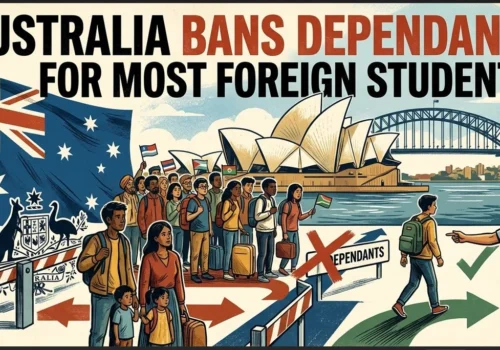
General Bar: Future international students will generally be barred from including partners, spouses, or dependent children as secondary applicants on Subclass 500 visas.
Exemptions: Exemptions apply to students pursuing higher-degree research (such as PhD programs) and students from Pacific Island nations and Association of Southeast Asian Nations (ASEAN) member countries.
Grandfathering: The rule applies to prospective applicants. Existing student visa holders and family members already in Australia will not be affected or separated.
2. Elimination of “Visa Hopping” & Onshore Course Switching
Course Progression: Students will no longer be permitted to move sideways or downwards through qualification levels (e.g., transferring from a bachelor’s degree to a lower-level diploma) solely to extend their stay. Visas will only be granted for clear, upward academic progression.
No Further Stay Conditions: A mandatory “No Further Stay” (Condition 8503) will be applied across future visitor visas. This prevents tourists from applying for substantive visas—such as student or onshore partner visas—while remaining inside Australia.
3. Working Holiday Maker Program Overhaul
Capped Second & Third Year Visas: The government is placing strict limits on working holiday extensions. The second-year visa cap will decrease to 45,000 places (down from 57,000), while third-year places will be capped at 5,000.
Ballot Selection System: Second- and third-year extensions will now be allocated through a random ballot system tied to regional work requirements.
4. Enhanced Compliance and Enforcement
Enforcement Capacity: The Department of Home Affairs will hire 100 additional compliance officers and expand immigration detention capacity by 250 beds to track down and deport individuals who remain in the country after their visas expire.
Voluntary Departure Window: Overstayers will generally be given a two-week window to arrange their self-departure before facing active detention and forced removal.
| Metric | Details |
| Peak Migration (2023) | ~518,000 net arrivals per year |
| Year to March 2026 | 292,100 net arrivals per year |
| Interim Target (2026–27) | 245,000 net arrivals per year |
| Final Target (2027–28) | 225,000 net arrivals per year |
| Education Export Value | ~A$53.6 billion to A$55 billion annually (4th largest export) |
Government Strategy: The center-left Labor government asserts the reforms are necessary to return migration to sustainable pre-pandemic levels, ease severe housing shortages, and prevent the temporary visa system from being misused as an indefinite residency pathway.
Education Sector Concerns: Peak industry bodies, including Universities Australia and the Group of Eight, warn that barring dependants could hurt Australia’s global competitiveness. Representatives note that prospective students—particularly those from key markets like South Asia—may opt for alternative destinations such as the US, UK, or Canada.


Jupiter Media Pvt. Ltd.
DOI No. 1854/076-77
015581367/ +97709841712200
Opposite to UMN, Upakar Marg, Thapathali-11, Kathmandu Nepal
Chairman: Raju Acharya
Director: Sunil Acharya
Editor: Tara Nath Dhakal
Cameraman: Hari Khadka
Reporter: Shashi Ram Bon
Concept: Lokendra Bhandari










Write your comment