


 Educast Nepal
EDUCAST,Representatives from various sectoral federations, civil society organizations, and human rights bodies active in the protection of human rights and child rights have emphasized the urgent need to promote climate governance and safeguard human rights under all circumstances. Expressing deep grief over the loss of life and property caused by the devastating Bhotekoshi flood on August 26, 2026 (Bhadra 10, 2083 BS), they urged stakeholders to learn from disasters, enhance preparedness, and take serious actions regarding relief, rehabilitation, family reunification, and search operations for missing individuals.

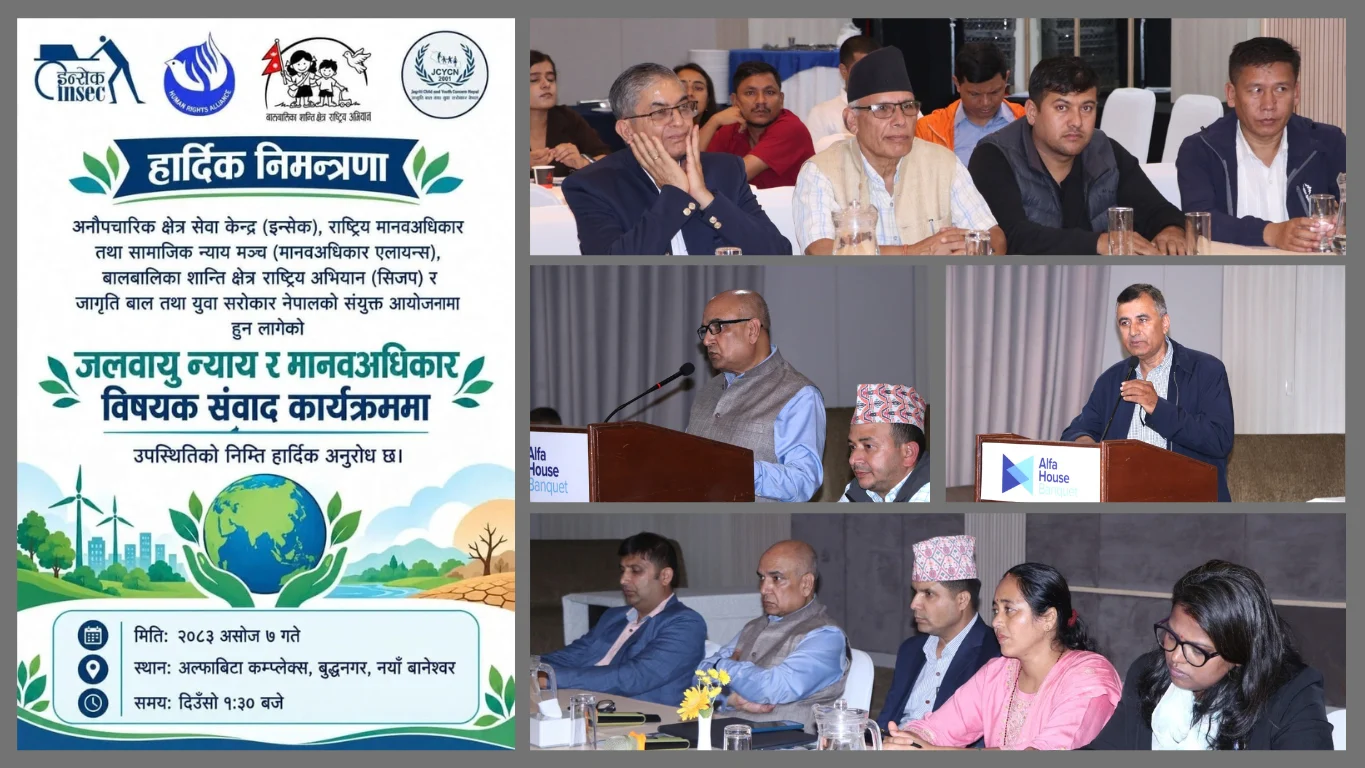
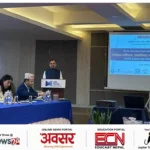
These remarks were made during an interaction on “Climate Justice and Human Rights,” jointly organized by the Children as Zone of Peace National Campaign (CZOP), Informal Sector Service Center (INSEC), Human Rights Alliance, and Jagriti Child and Youth Concern Nepal (JCYCN).
Chaired by INSEC President Bijay Gautam, the program opened with welcome remarks by Bidur Subedi, President of the Human Rights Alliance. Subedi emphasized that vulnerable nations like Nepal are bearing the severe consequences of environmental damage caused by major emitting countries. He noted that the lack of effective coordination and cooperation in national and international commitments, social justice, and disaster preparedness ultimately leads to massive losses of life and property.
The event saw the participation of journalists, representatives from 25 civil society organizations, and 15 national networks working across various fields, including the NGO Federation of Nepal.
Facilitating the discussion, Tillottam Paudel, President of CZOP and JCYCN, pointed out that children, adolescents, persons with disabilities, sexual minorities, senior citizens, and pregnant or lactating women face the highest risk during disasters. He highlighted their increased vulnerability to violence, abuse, trafficking, and forced labor. Paudel stressed the need for greater sensitivity toward their rights, the provision of psychosocial counseling services, and special arrangements for children’s education, health, protection, and the care of orphans.
Navaraj Sapkota, Joint Secretary at the National Human Rights Commission (NHRC), delivered a presentation on human rights and climate justice. Other speakers—including Arjun Bhattarai, President of the NGO Federation of Nepal; Parwata Gautam, General Secretary of FECOFUN; Shyam Kumari Shah, Women Human Rights Defender; Nani Maya Thapa, Senior Vice President of the NGO Federation; alongside Sugat Bhattarai, Sushil BK, Mohan Dangal, Haribol Acharya, and Pradeep Lamichhane—shared their views on climate justice and human rights.
Participants called for child-friendly, nutrition-friendly, non-discriminatory, gender-sensitive, and senior-citizen-friendly approaches in relief and disaster response. They emphasized that guidelines, rescue operations, and risk mitigation strategies must be formulated based on the actual needs and suggestions of affected communities.
Key demands raised during the interaction included:
Viewing assistance to affected populations as a matter of climate justice rather than charity or mercy.
Demanding compensation from major emitting nations instead of accepting financial burden as loans.
Incorporating climate change and human rights topics into educational curricula.
Strengthening early warning systems and disaster-resilient social security programs.
Establishing a dedicated parliamentary committee on climate and disaster management to monitor progress and consolidate public advocacy.
Concluding the program, INSEC President Bijay Gautam underscored the importance of building a unified position among all stakeholders to effectively advocate for climate justice and human rights.


Jupiter Media Pvt. Ltd.
DOI No. 1854/076-77
015581367/ +97709841712200
Opposite to UMN, Upakar Marg, Thapathali-11, Kathmandu Nepal
Chairman: Raju Acharya
Director: Sunil Acharya
Editor: Tara Nath Dhakal
Cameraman: Hari Khadka
Reporter: Shashi Ram Bon
Concept: Lokendra Bhandari








Write your comment